Frequently asked questions
The questions we hear most often from people buying a home in Italy, people who need a mortgage and owners who want to sell. Short, clear answers. If your case is different, ask Alessandro.
Buying a home in Italy
Can a foreigner buy a home in Italy?
EU citizens can buy on the same terms as Italians. For some non-EU citizens a reciprocity rule applies: the notary checks it. You always need an Italian tax code (codice fiscale).
How much does buying cost on top of the price?
Taxes, the notary, the agency fee if any, and mortgage costs if you need one. As a rough guide, between 5% and 10% of the price, depending on whether it is your main home or a second home and whether you buy from a private seller or a company. We give you a precise estimate with the notary before you make an offer.
What taxes apply to a second home?
Buying from a private seller: 9% registration tax on the cadastral value (not the price), plus € 50 mortgage tax and € 50 cadastral tax. Buying from a company: usually 10% VAT on the price (22% for luxury homes), plus € 200 for each of the three fixed taxes.
What is the purchase offer?
A written offer stating price, timing, any conditions (for example getting a mortgage) and a deposit. Once the seller accepts it in writing, it binds both parties.
What is the difference between the preliminary contract and the deed?
The preliminary contract (compromesso) is the promise to sell and to buy: it sets price, deposit and completion date and must be registered within 20 days. The deed (rogito) is the final act signed before the notary, when ownership passes to the buyer.
What if I do not speak Italian?
If one party does not understand Italian, an interpreter must be present at the deed. You can also appoint a trusted person with a power of attorney. Details are always agreed with the notary.
Mortgages
Can I get a mortgage in Italy if I live abroad?
In some cases, yes. It depends on residence, type of income and each bank’s policy. We check it case by case, without taking anything for granted.
How much will the bank lend?
Usually up to 80% of the value set by the bank’s surveyor. The rest, plus costs, must come from your own savings.
Fixed or variable rate?
With a fixed rate the instalment never changes. With a variable rate it follows interest rates and can go up or down. Mixed formulas also exist. It depends on how much room your budget has: we talk it through in the first meeting.
Can I make an offer before the mortgage is approved?
Yes. The offer can be made subject to mortgage approval: if the bank says no, your deposit is returned.
Can you guarantee the mortgage?
No. Nobody can guarantee approval: the bank decides. We help you prepare a clear, complete application and understand early which options are realistic.
Selling
Can I sell my Italian property while living abroad?
Yes. You can follow everything remotely and, for the deed, come to Italy or give power of attorney to a trusted person. We keep you updated at every step.
Do I pay tax when I sell?
Usually not. Tax is due only on the gain if you sell within 5 years of buying, unless the home was your main residence for most of that time or you inherited it. Check with your tax adviser.
Which documents do I need to sell?
Usually the deed of origin, floor plan and cadastral records, the energy performance certificate (APE), building compliance documents and, for apartments, condominium information. We check them together during the valuation.
A&C Immobiliare
Where are you?
In Udine, Via Marangoni 28/a, and in Milan, Via Venini 34. From Udine we also cover Lignano Sabbiadoro and Grado. Please call or write before coming, so we can book a time.
Who will I deal with?
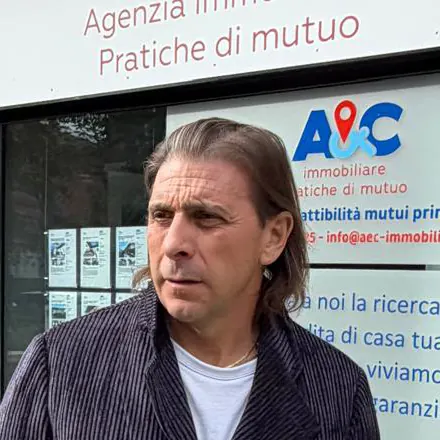
Alessandro Cavassi, from the first call to the deed, including the mortgage application.
Information on taxes and legal rules is general and up to date as of October 2026. Every situation is different: always check with the notary or your tax adviser before deciding.
By A&C Immobiliare · Updated on
Still have a question?
Ask Alessandro directly: he will answer you personally.
